Merciless turn-based village survival with deep worker placement
DotAge, created by Michele Pirovano, casts you as a prophetic Elder guiding a village through an approaching apocalypse. It combines turn-based city building, worker placement and resource management to survive randomized Fate events, research hundreds of buildings, and adapt across roguelite runs and persist through evolving disasters. Key systems include worker placement, 500+ Fate events, a 200+ building research tree, 70+ resources, and a medieval soundtrack derived from the Montpellier Codex. Designed for deep strategy and roguelite fans who value crisis management and high replayability, and board-game players.
What kind of game is this merciless city builder?
So, you begin as a prophetic Elder in a secluded medieval village, and every decision shifts the community's fate. The game is a turn-based city-builder fused with worker placement systems inspired by European board games, with roguelite progression through 'The Memory'. Thus, the core loop centres on assigning Pips, researching buildings, and resolving hundreds of randomized Fate events that threaten the settlement.
How do mechanics shape survival and strategy?
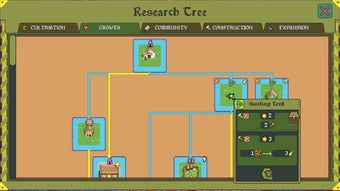
Decisions have direct consequences: assigning a Pip to a profession changes resource flows and affects the four opposing Domains like Health or Cataclysm. The worker-placement design, modelled after European-style board games such as Agricola, forces trade-offs each turn. Players manage 70+ resource types and 30+ professions while unlocking parts of a 200+ building research tree, so small choices compound into long-term vulnerability or resilience.
What does the world feel and sound like?
The village tone leans medieval and austere, supported by a soundtrack that rearranges pieces from the Montpellier Codex, which gives events a period-accurate texture. Maps and research trees are procedurally generated, so visual layouts and strategic options shift each run. The interface emphasises clear turn-based choices rather than spectacle, and full controller support plus Steam Deck verification make the experience playable on handheld setups without losing its methodical pacing.
Is it hard to get started?
Yes, the learning curve is steep by design; the title brands itself as 'merciless' and presents over 500 Fate events that can abruptly derail runs. Onboarding relies on experimentation across runs rather than gentle tutorials, though 'The Memory' meta-progression unlocks buildings and Elders to widen options over time. Thus, players who enjoy repeated high-stakes runs and gradual meta unlocks get the most reward from persistent play.
Final judgment: a demanding pick for patient strategy players
The game is a demanding choice for players who favor high-stakes, consequence-driven strategy rather than casual building, and it rewards patient, repeat engagement. Nine-year solo development gives the project a singular design focus, but that same intensity reduces its appeal for players seeking relaxed pick-up sessions. Best for those prepared to learn by trial and endure hard runs.